In short
As Product Design Manager at Staples’ print services, I led an evidence-based UX strategy that improved sales performance and customer satisfaction through:
- Aligning research-driven insights with business objectives
- Guiding product portfolios toward a cohesive experience vision
- Iterating through A/B-tested experiments before full launches
- Collaborating across teams (managing six designers) to refine solutions in real time.
Key results were achieved by systematically applying these principles from 2021–2025, ensuring continuous iteration aligned with evolving customer needs and business priorities.
Designing research
Research isn’t just part of design—it must be designed too. I facilitated multiple workshops with product teams (including product managers, designers, and executives), to define key questions, prioritize them by risk and value. Next, I selected the appropriate methodologies for gathering insights, coordinated cross-functional efforts, and established frameworks for data collection and documentation across distributed teams.
From the research insights, there were four core key themes that surfaced to improve the experience for both customers and associates:
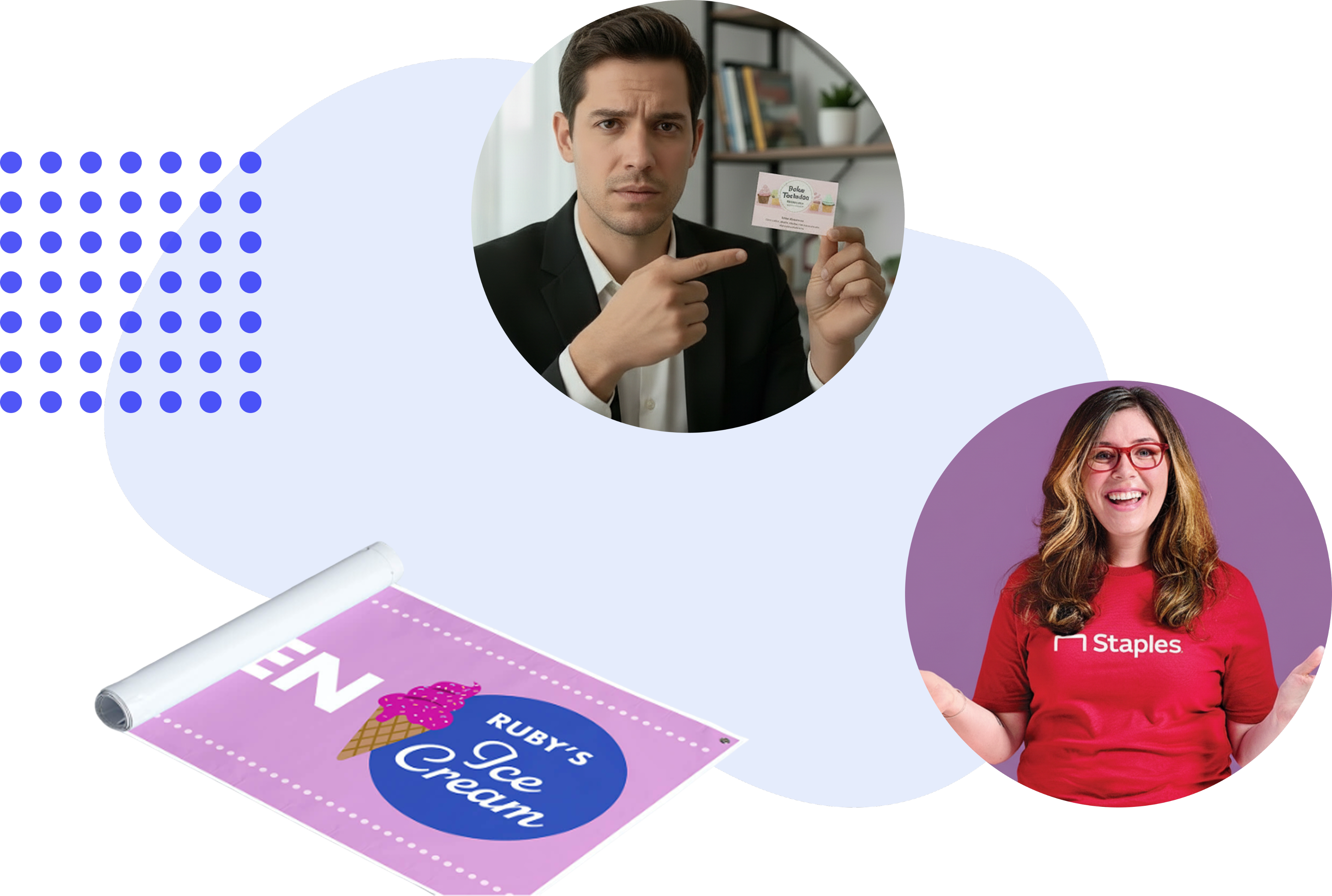
Product discovery & assurance
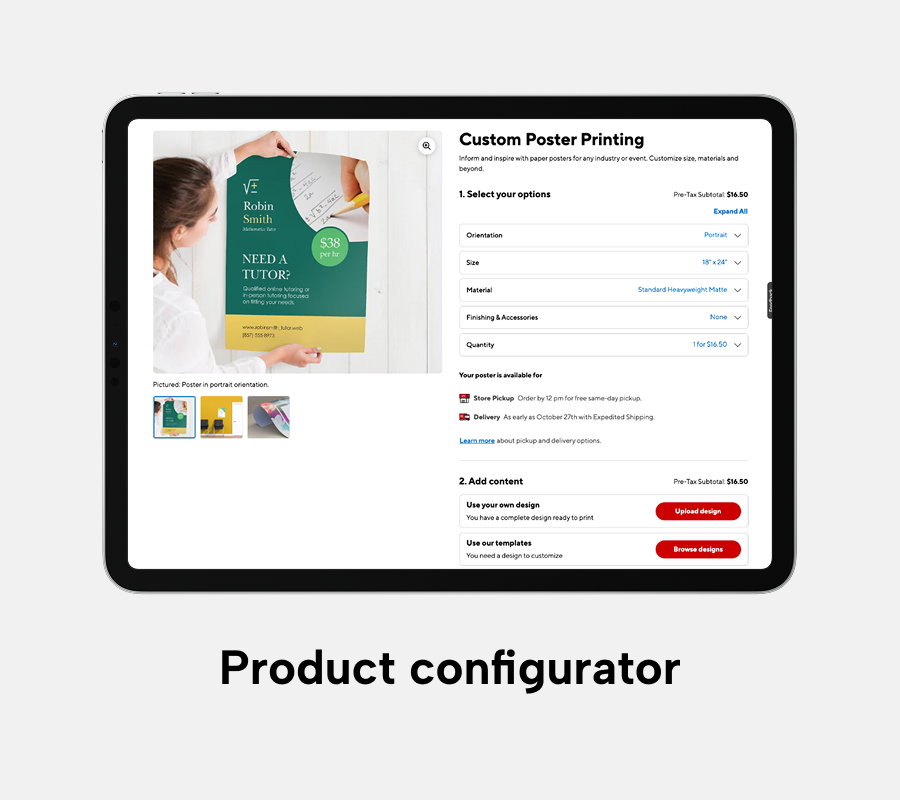
Help customers find the right product and options with price transparency.
Designing, proofing & troubleshooting
Make it easy to create, prevent or fix errors to ensure quality products.
Order status
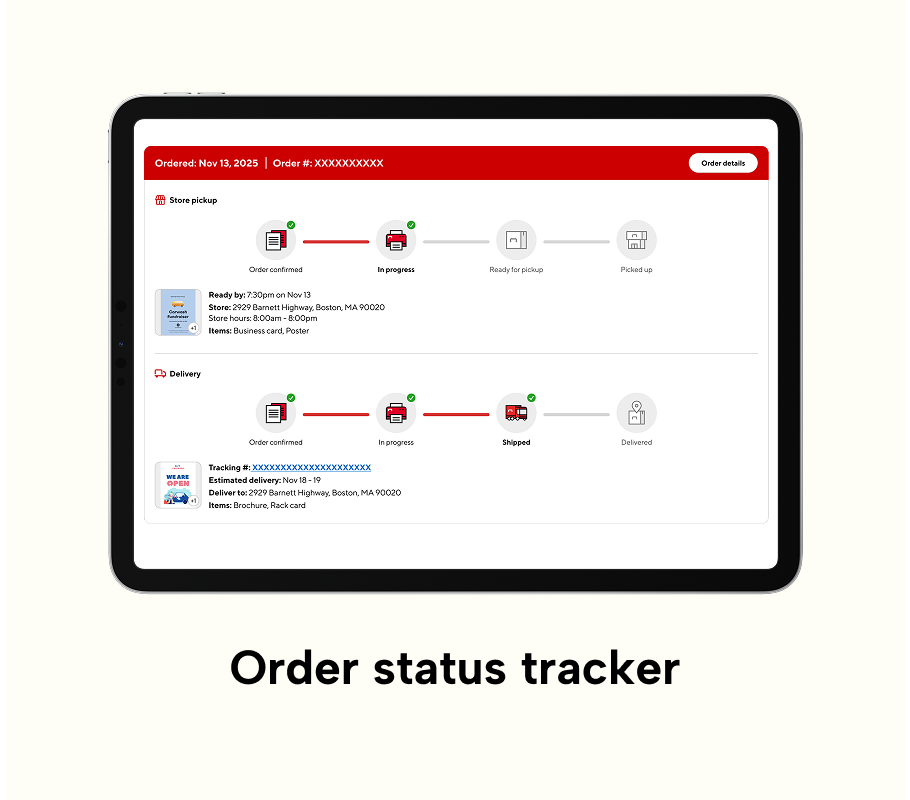
Communicate orders’ status accurately and provide updates.
Reorder
Allow customers to quickly reorder the exact same product or a variation of it.
Creating and sharing an experience vision
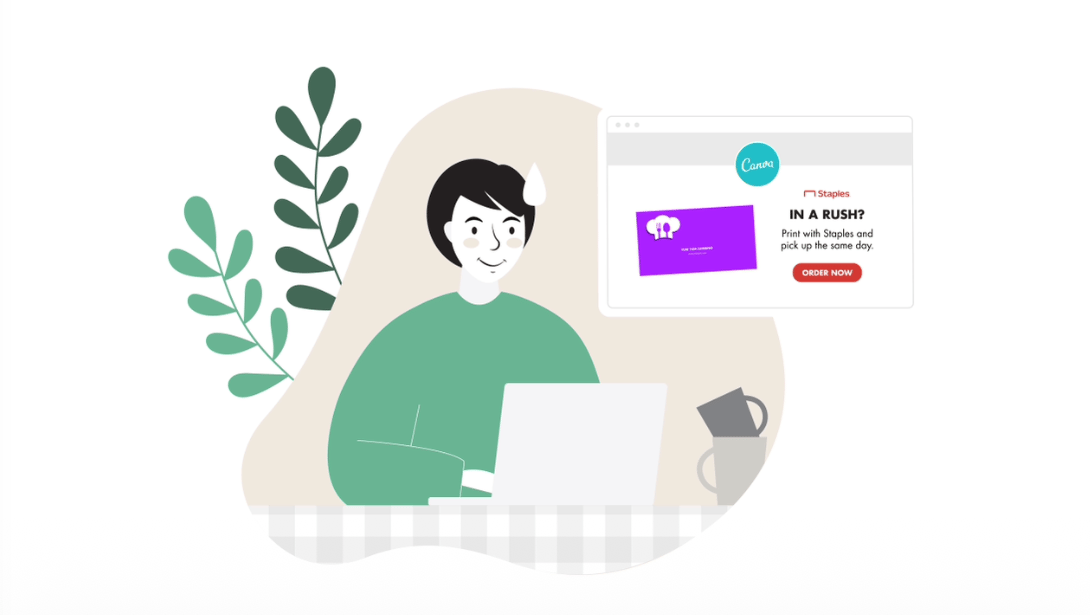
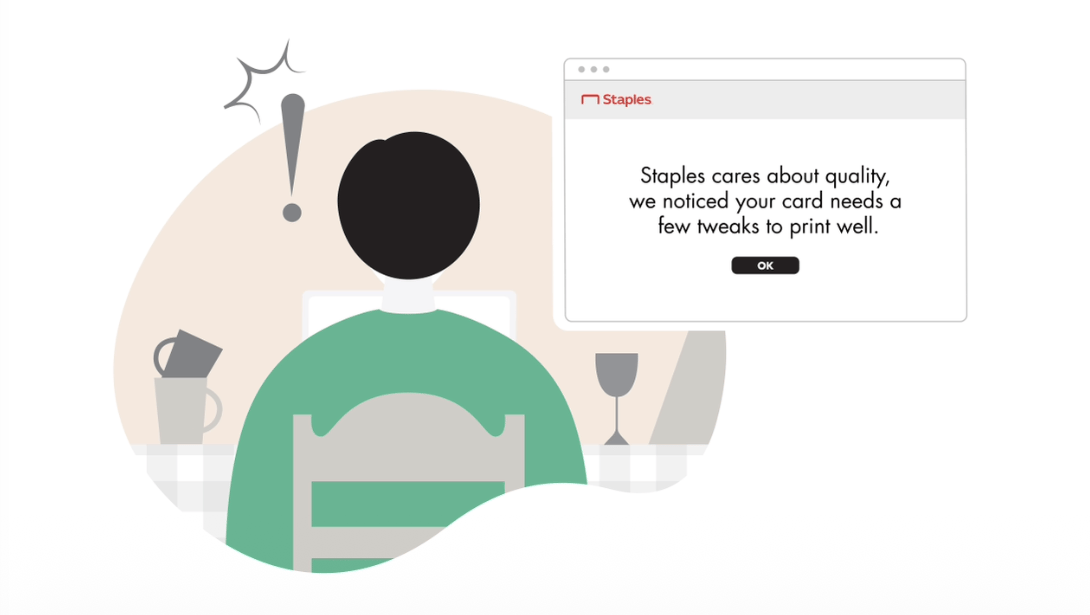
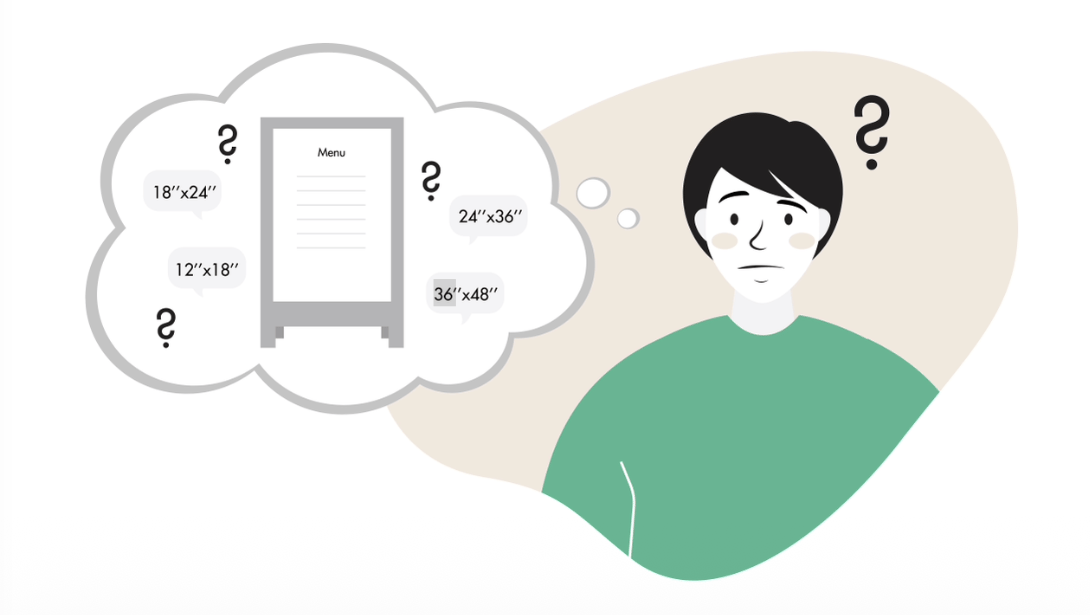
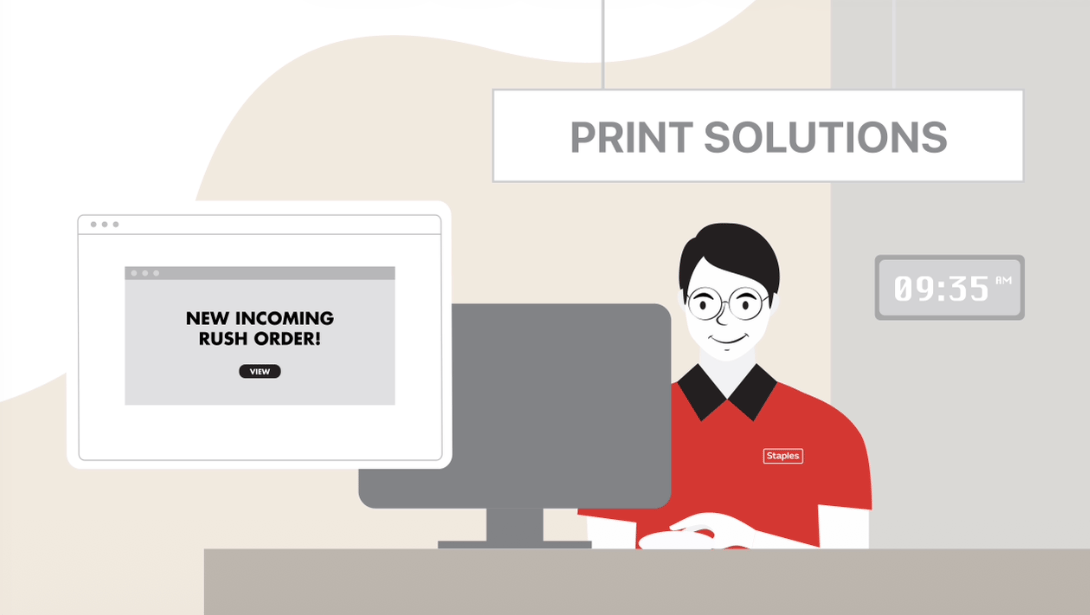
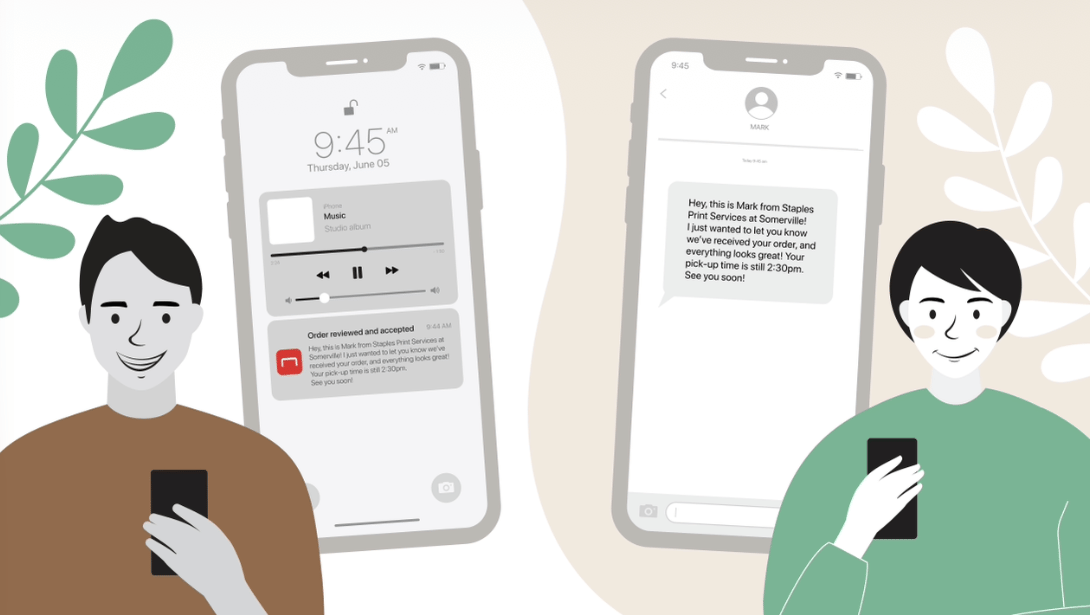
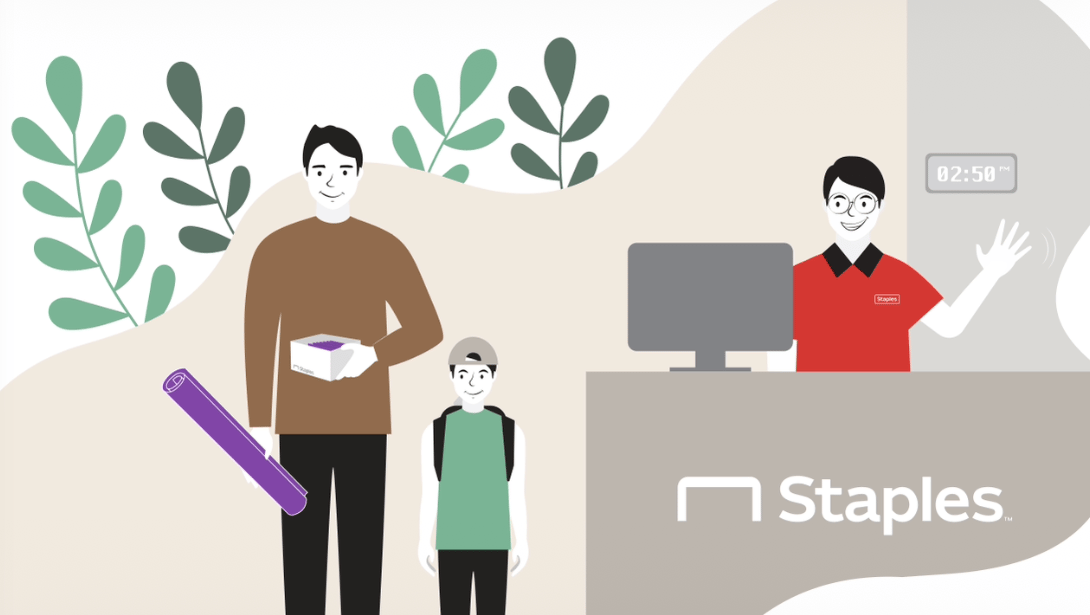
Using these insights, I crafted an omnichannel experience vision and guided a designer to create a storyboard, intentionally showing minimal references of UI not to prescribe solutions early on.
First, I presented the experience vision to leadership, and then I shared it with the entire product and development teams during our Program Increment Planning, uniting everyone behind delivering exceptional customer experiences. Many of these stories became real features—either launched or still in development.


What could we do and what should we prioritize?
I worked with my product partners to develop opportunity solution trees for each portfolio, ensuring alignment between business goals and UX outcomes.
All product portfolios were designed around measurable business outcomes. Though they used different KPIs—all ultimately aimed at increasing the percentage of customers who:


Make a purchase
or

Purchase again
Portfolios:

Proofing & troubleshooting

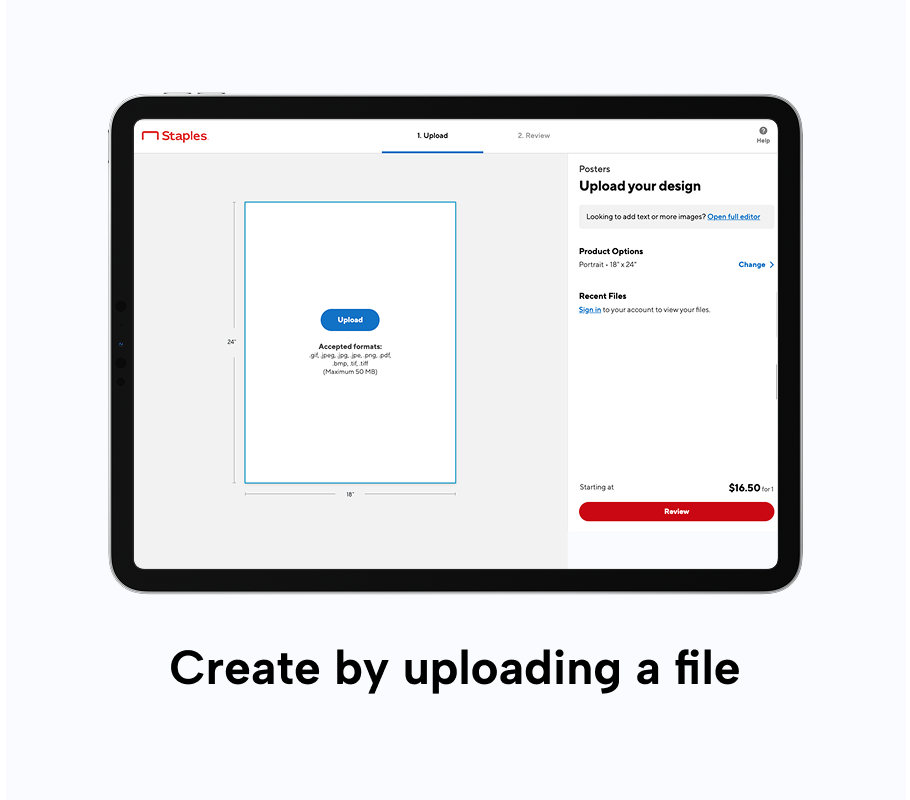
File upload & design customization

Product discovery & assurance

Cart & checkout

Order status & reorder

Print production & management
Know better and learn faster
Over my four-year tenure as Product Design Manager, I applied Lean UX principles through a variety of structured workshops—often broken into multiple sessions—to engage diverse stakeholders at each stage. These sessions typically included developers, product managers, designers, marketing specialists, CX specialists, store supervisors, directors, and VPs, ranging from 6–8 participants but scaling up to a maximum of 16 for high-impact initiatives. This approach ensured balanced input while maintaining focused collaboration.
Using rapid prototyping, testing, and developer collaboration, I refined the solutions with designers with continuous feedback loops and fostering a team culture of peer-to-peer feedback.
At Staples, with over 25M annual site sessions, small improvements drove measurable impact. Experiments scaled only if they met UX and business goals, driving measurable impact with continuous data-driven iteration.
For a deeper look at how I turned insights into action and portfolio design execution, review this case study—where I show how we aligned expectations with reality.
Modular design, a governance plan
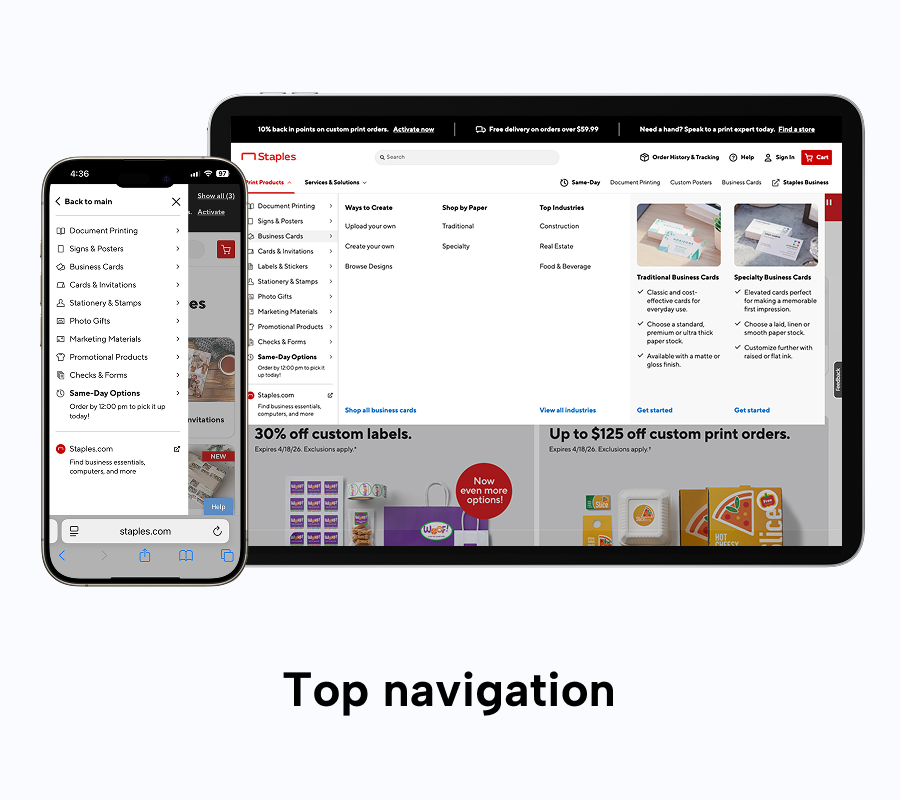
To redesign parts of the website that are rich in content–like top navigation and top-of-funnel pages–I championed more frequent experimentation, enabling marketing to update seasonal promotions or campaigns to refresh the site. This way, the product design team was also empowered to test different hypotheses or versions by adjusting content alone—no development needed for different iterations.
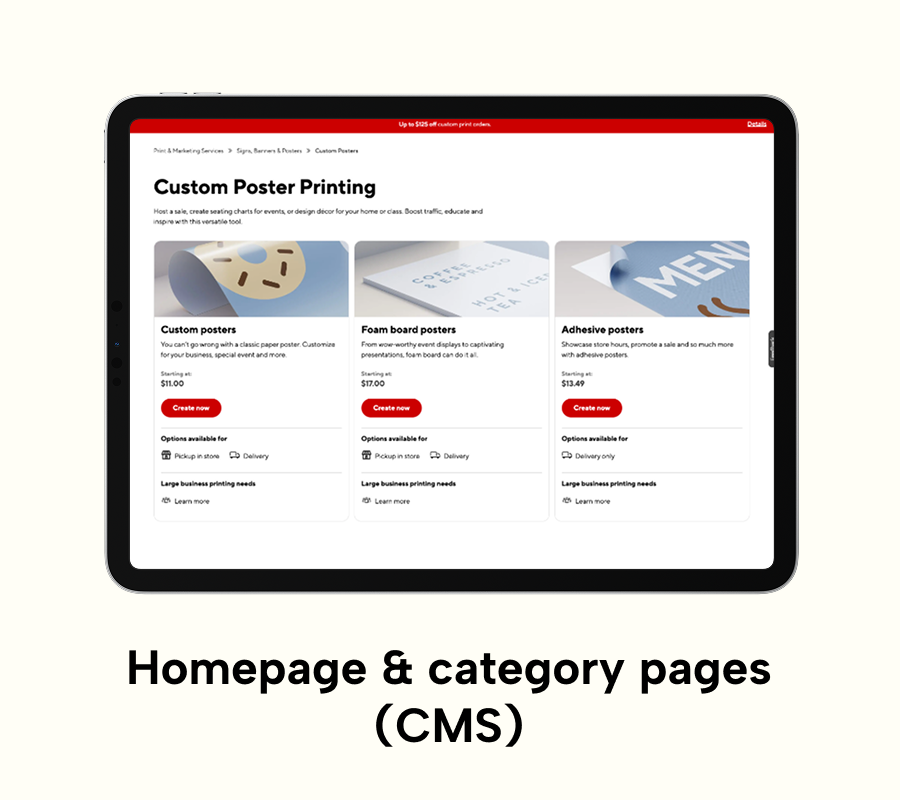
I worked with development to build a CMS-driven system where new pages were designed as modular components with reusable variants.
My role was to guide the design team in creating a scalable system that allowed flexible combinations and future adaptability. I established a robust design system framework for seamless experimentation and growth while ensuring alignment across every team involved.
Accessibility as a design priority
Creating accessible websites requires intentional planning from the start—it shouldn’t be an afterthought. While many teams leave accessibility to developers, I advocate that it begins with designers. Accessibility isn’t just about compliance; it makes experiences better for everyone by ensuring they’re usable by all users.
By deeply understanding Web Content Accessibility Guidelines (WCAG), I ensured designs included key elements like:
- Good color contrast
- Meaningful navigation sequences
- Properly sized clickable/tappable targets
- Avoiding images of text and relying on alternative sensory cues
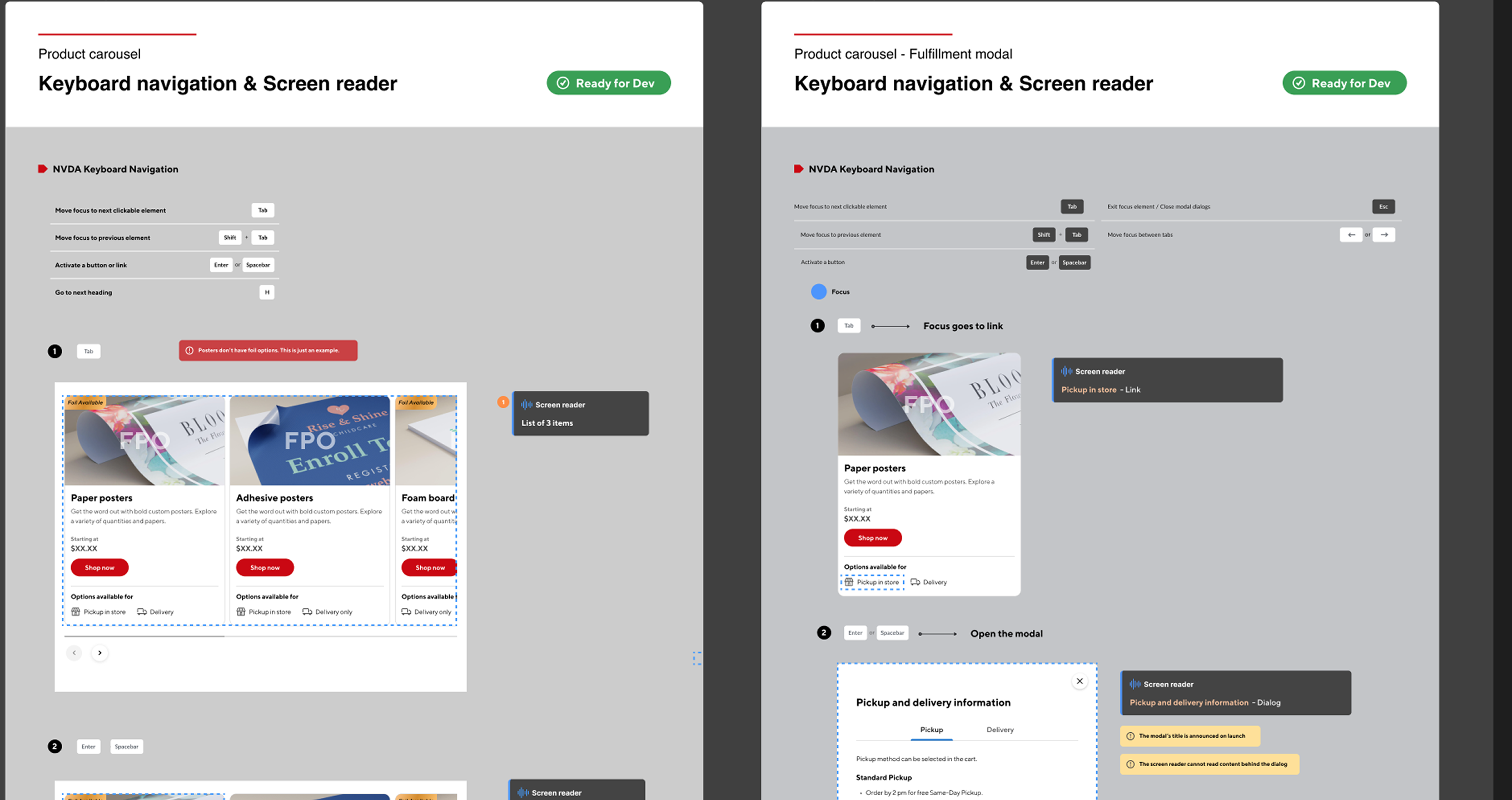
I also created accessibility documentation that designers passed along to developers, covering essentials such as keyboard navigation and screen reader compatibility.
Designing for people, not just outcomes
By the end of my tenure at Staples, I had deep understanding of their wide customer base, store associates, and their needs across the multiple touchpoints. Knowing that the decisions we made impacted so many business owners, educators, students, parents, workers, and more, made advocating for them a task that I took seriously and passionately.
Behind every wireframe and prototype was a foundation of research, collaboration, and respect. I’m proud to have served as a facilitator and connector who helped deliver strong business outcomes while cultivating meaningful, lasting relationships across my team and partners.
Explore some examples the impact made on the customer experience: